
Real Life in Japanese Care Work: A Typical Day, SSW Pay, Living Costs and Adjustment
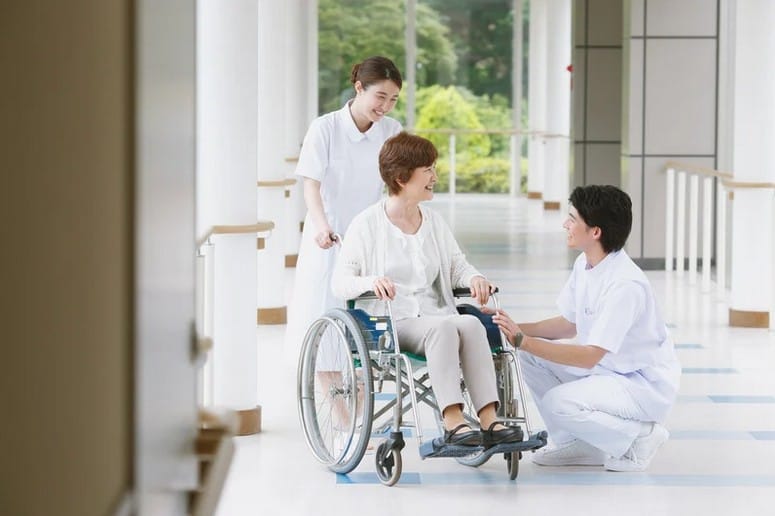
What does working in care in Japan actually involve? Care work is not "pure manual labour" but a professional support role. If you are about to set foot in Japan, or have just arrived, your excitement about the future is likely mixed with very practical questions: what will the work actually be like? Will the salary really cover living costs? Will I adapt? This chapter strips away all the filters and uses real numbers and real scenes to paint a picture of everyday life working in care in Japan. This is not just a career choice; it is the start of a distinctive way of living.
First, a common misconception needs to be turned on its head: care work is not simply "physical labour" or "waiting on people". Its professional core is supporting older people to maintain independent lives as far as possible. It is a skilled occupation demanding sharp observation, communication technique and specialist knowledge. Your role is a supporter, not a substitute. The job satisfaction comes from seeing an elder's face light up when they complete a small task themselves with your well-judged assistance, and from noticing a subtle change in an elder's condition early enough to report it and prevent a crisis. Understanding this is the foundation of professional pride and long-term motivation.
A Day In Kaigo
So how does a typical day unfold? Take an early day shift at a residential care facility as an example. At seven in the morning you arrive and hand over in detail with the night-shift colleagues, learning how each resident passed the night. From half past seven the morning care peak begins: helping residents get up, use the toilet, wash and dress. This is not mechanical work — throughout, you are speaking softly, encouraging, and respecting each resident's pace and wishes. At around nine o'clock you help with breakfast, watching for swallowing difficulties, catering to dietary preferences and confirming medication. During the morning activity period you might lead simple exercise routines or cognitive games, or simply accompany residents on walks and chats. After helping with lunch, the centrepiece of the afternoon may be bathing, a task combining technique and physical effort where safety and comfort are paramount. The rest of the day goes on tidying the environment, writing care records, and meeting with the team of nurses and therapists. At four in the afternoon you finish with a careful handover to the incoming shift. You will find that four things — communication, observation, record-keeping and teamwork — run through every minute of the day.
Pay And Allowances
Now for the most practical question: money in and money out. Take a first-timer on a Specified Skilled Worker visa in the Greater Tokyo area as an example. Gross monthly pay (before tax) usually falls between JPY 180,000 and JPY 220,000, including the basic wage plus allowances for night or holiday shifts. Japanese employers also typically pay a bonus twice a year, in summer and winter, and the annual bonus total is roughly equivalent to two to four months' salary. Annual income therefore comes to somewhere between JPY 2.5 million and JPY 3 million.
Is your Japanese good enough? How do you choose an employer? Are there traps in the contract? WhatsApp Labour Services Company Ltd and we will assess your feasible route to care work in Japan, free of charge. For Hong Kong people applying for care work in Japan, see https://labourservices.com.hk/japanese-nursing-care/.
Cost Of Living Breakdown
So is that enough to live on? Let us do the sums for a frugal but reasonable single life. If you live in employer-provided dormitory accommodation or share with others, monthly rent can be kept to between JPY 40,000 and JPY 70,000. Utilities, gas and internet come to about JPY 20,000. Cooking for yourself, food costs around JPY 30,000 to JPY 40,000. Health insurance and resident tax deductions take about JPY 20,000 to JPY 30,000, and transport, phone and daily sundries around JPY 20,000. On that basis you can save roughly JPY 50,000 to JPY 90,000 a month, equivalent to about HK$2,500 to HK$4,500. That is enough to build savings gradually, pay for language study or qualification exam fees, and enjoy a modest social life. And once you obtain the national care worker qualification (kaigo fukushi shi), monthly pay rises to JPY 230,000 or JPY 280,000 and above, making life considerably more comfortable.
There is also the harder side: mental and cultural adjustment. Physical tiredness and emotional strain are the first challenge. The body can adapt through a regular routine and exercise, but facing ageing, illness and even death demands real psychological resilience and healthy ways of releasing stress. The deeper language and cultural gaps are a continuing battle. Even after passing JLPT N2, residents' regional dialects, the subtle culture of reading the air in the workplace and the intricate system of honorific speech can all be frustrating. Fitting into Japanese workplace relationships, built on the discipline of reporting, informing and consulting, also takes time and learning.
How do people last in this job? Despite the challenges, the rewards often go beyond money. You gain a key into Japanese society at depth, entering the most personal and tender sphere of families and communities and building bonds of deep trust. The direct and profound sense of being needed, and the achievement that comes with it, are hard to match in many occupations. You gain a stable, regular rhythm of life, protected by Japan's well-developed social security system. And, using the predictable shift-rest pattern, you can explore the country's four seasons and cultural depth slowly, as a resident rather than a tourist. Choosing care work is choosing not just a job but a way of life connected deeply with people, finding your own value through giving. When you are ready to face the real challenges, you will also reap real growth and satisfaction.
If you want to work in care in Japan but are still stuck on questions like "is my Japanese good enough?", "where do I even start looking for a job?", "after deductions, will the salary cover living costs?" or "are there pitfalls in the contract?" — contact a Labour Services Company Ltd consultant on WhatsApp, telling us your background (city, Japanese level, work experience). We will help you sketch a preliminary route to working in Japan, covering the preparation checklist, the timeline, the key points for interviews and documents, and things to note before departure.