
Why Hong Kong's Imported Labour Policy Is Always Controversial
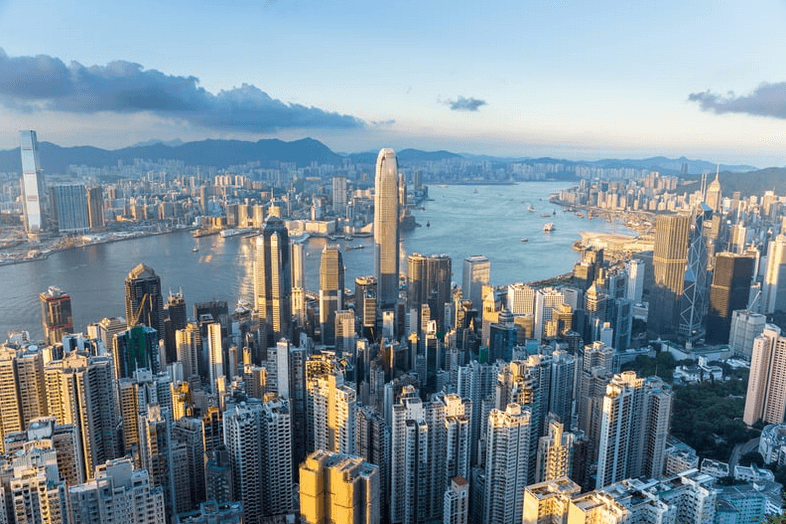
In a global contest for people, imported-labour policy is no longer a simple sum. It is a test of whether a government can keep an economy competitive without discarding fairness at home.
Hong Kong's imported-labour policy has been a public argument for several years. The Enhanced Supplementary Labour Scheme (ESLS) and the various sector schemes have drawn sharp comment from both labour and employers. Singapore and Taiwan face the same tension. They have chosen different tools, and they have different results.
Since ESLS was launched in September 2023, more than 54,000 imported workers have been approved, of whom nearly 28,000 are in catering. The scheme was meant to ease shortages in catering, construction and other trades. Local workers have pushed back hard.
Labour groups argue that imported labour has turned regular jobs into casual ones, and casual jobs into no jobs. Figures cited in the debate show that after the scheme expanded, unemployment in food and beverage services rose from 4.4 per cent to 5.0 per cent, and in retail from 3.5 per cent to 3.9 per cent, both above the overall rate of 3.2 per cent.
Employers, for their part, say the cost of applying is too high and approval too slow. Business groups have asked for the ESLS general staffing ratio of 2:1 — two full-time local staff, each working 35 hours or more a week, for each imported worker — to be relaxed, some even arguing for 1:1. From 16 June 2026, food and beverage counts kitchen and floor separately at 3:1 per department. This is not legal advice; the Labour Department's texts prevail.
Singapore's system is more mechanical. It uses a foreign-worker levy to regulate numbers and to stop employers leaning too hard on cheap imported labour.
Quotas and levy rates vary by trade. The levy on each imported worker is substantial. It raises public revenue and makes it harder for imported pay to drag local pay down.
More useful still, Singapore adjusts with the cycle: it cuts imported labour in a downturn to protect local jobs, and raises it when the economy overheats and shortages bite. That flexibility is how Singapore has tried to protect local employment and still feed growth.
Taiwan offers a different lesson. Imported workers there are treated relatively generously. Basic wages match local workers — about NT$20,000 a month in 2023 — and labour and health insurance are included.
That generosity had effects the design did not intend. Imported-worker pay in Taiwan sits well above Singapore's range of US$300 to 650, yet Taiwan's GDP per person is about half of Hong Kong's and a third of Singapore's. Two results followed.
Employers found the cost heavy and hired less. And the terms attracted large numbers of absconded imported workers: by 2023 more than 90,000, about 12 per cent of the imported workforce. Those workers moved into the informal economy and created a different set of social problems.
Several differences stand out.
On flexibility, Singapore uses adjustable quotas and a levy that can move with the economy. Hong Kong and Taiwan have been more rigid, with less room to retune in real time.
On cost, Singapore folds an external cost back onto the employer through the levy and collects revenue at the same time. Hong Kong uses the Employees Retraining levy, typically a one-off HK$9,600 (HK$400 multiplied by the months of the contract, capped at 24 months). That sum is modest beside Singapore's levy, so it does less to change employer behaviour.
On rights, Taiwan gave imported workers a fuller package and paid less attention to whether the economics would hold. Singapore and Hong Kong have tried to sit between protection and cost.
Policy will keep moving, and so must the way you apply. WhatsApp Labour Services Company Ltd. (licence 81090) for a reading of what the current rules mean for your firm. Process and fees are at https://labourservices.com.hk/imported-workers-process-fees/
Hong Kong can take several points from the two neighbours.
Build a dynamic adjustment: tie imported-labour quotas to the state of the economy and to unemployment, so that a rise in a trade's jobless rate automatically trims the related quota.
Reform the levy: consider turning the Employees Retraining levy into a more active imported-labour tax, with the rate tied to conditions in each trade's labour market.
Tighten supervision and make it visible. Fake local recruitment is a live problem. Watch the employer's recruitment process so that local workers genuinely get first go at the post.
Over a longer horizon, use technology and automation to depend less on low-skill labour. That eases shortage and raises productivity and competitiveness together.
The argument in Hong Kong is, at root, efficiency against fairness. The economy needs people. Social stability needs local workers to keep their jobs and their pay.
Refusing imported labour altogether can stall growth. Opening the door without a limit can harm local workers. The work is to find a point that supplies the labour growth needs and still protects local employment and incomes.
Singapore's dynamic adjustment and Taiwan's rights package are both worth studying. Hong Kong has to take what fits its own facts and write a more complete, more balanced policy.
That is how the city keeps an economy that moves and a society that still feels fair. It is a government duty, and it also needs employers, workers and the rest of the public to think clearly together.
Hong Kong employers watching where the policy goes next can talk through the application process, the true cost and a staffing plan that still fits. WhatsApp Labour Services Company Ltd. (licence 81090) for a one-to-one reading, so that you keep an edge while the rules move.