
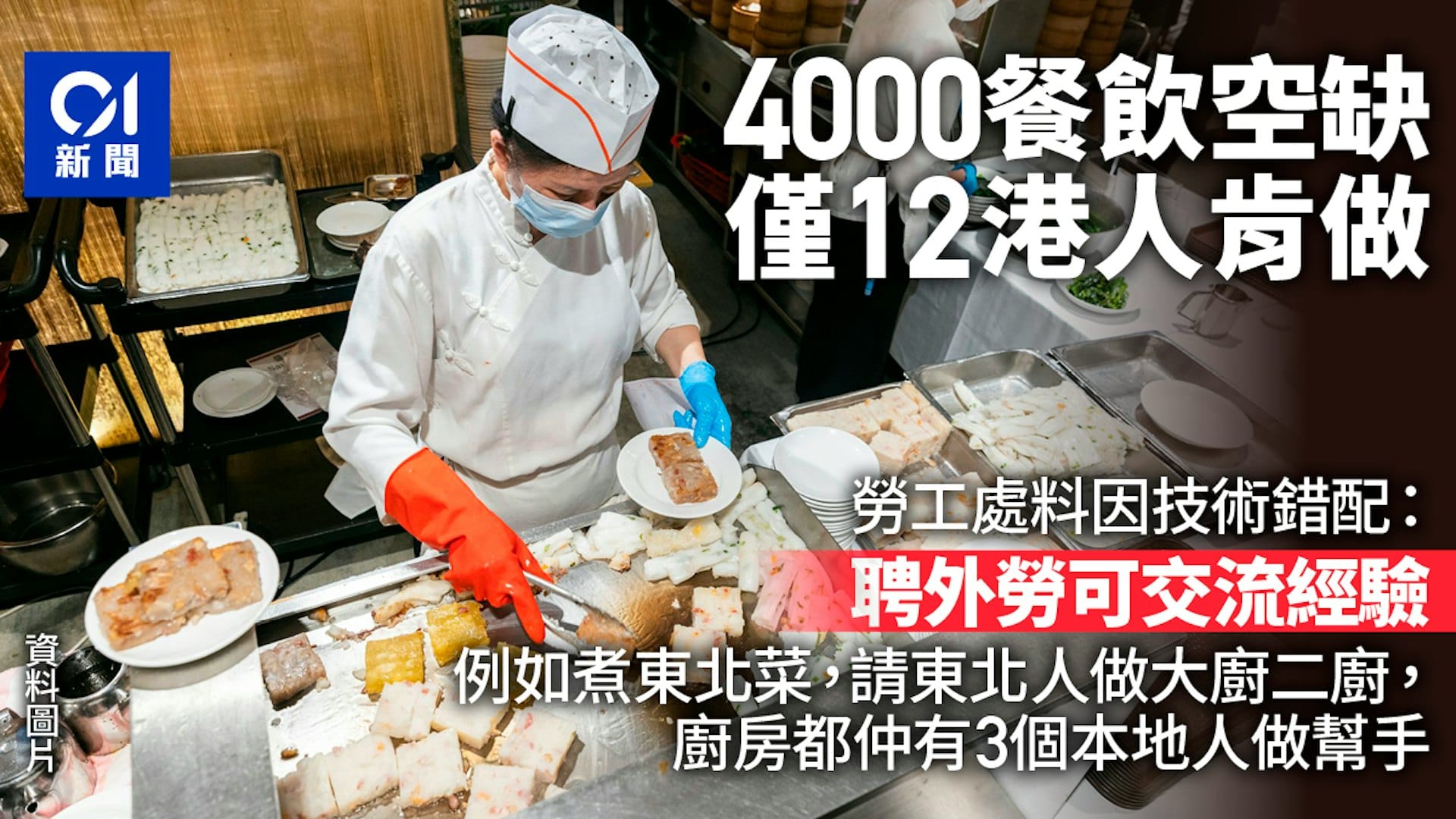
4,000 catering vacancies, only 12 locals took the jobs | Labour Department blames skills mismatch: imported workers enable skills exchange | HK01
The Labour Department has completed its review of the Enhanced Supplementary Labour Scheme (ESLS), implementing a two-tier approval system from tomorrow. Tier 2's local-to-imported ratio becomes 3:1, and the local recruitment period extends to six weeks — covering catering's kitchen production and front-of-house, i.e. waiters, cooks and cashiers.
Commissioner Tak-sum Hui said that from last September to this May, catering had nearly 4,100 vacancies; 720 locals interviewed, 234 were hired — but only 12 accepted. In his view, catering is not a simple case of labour surplus or shortage but a "severe manpower mismatch": he estimates that as traditional Chinese dining declines and Southeast Asian restaurants rise, experienced workers' skills no longer match. With the tightened ratio, he believes imported workers hired by restaurants can "exchange experience" with locals — "say you're cooking Northeastern cuisine: hire Northeasterners as head and second chefs, and the kitchen still has three locals as helpers".
Labour Department: severe mismatch in catering
The department's preliminary estimate is that catering's supply and demand looked nearly balanced last year, yet the sector still shows roughly a 5% vacancy rate and 6% unemployment — reflecting mismatches in skills, job nature and location. Hui said that from September to May, catering employers applying to import workers offered nearly 4,100 vacancies, but only 720 locals interviewed during the local recruitment periods, 234 were hired, and only 12 accepted. The unmatched unemployed are mostly experienced catering workers aged 45 or above.
"What we see in the industry is not a simple shortage or surplus of (labour) supply, but a severe manpower mismatch." — Commissioner Tak-sum Hui
Skills of displaced workers don't match new restaurants
The department puts catering's production and front-of-house positions into the Tier 2 mechanism, with a stricter 3:1 ratio calculated across the department's total positions. Labour believes the new measure will push employers to offer better terms, narrowing the pay and skills expectations gap.
Hui noted that recent closures of Chinese restaurant groups released many chefs, but new restaurants — mainly Southeast Asian or mainland regional cuisines — need skills that don't match local chefs, creating the mismatch.
Imported head chef with local helpers enables "experience exchange"
Even requiring three local hires per imported worker, does that solve the skills mismatch? Hui noted that before the "same position" restriction, some specialist-cuisine restaurants hired only imported chefs. After tomorrow's tightening, a restaurant can hire one imported head chef plus three local cooks — enabling experience exchange and building local workers' skills.
"For Northeastern cuisine, hire Northeasterners as head and second chefs; the kitchen still has three locals helping — that widens the technical range of local practitioners." — Commissioner Tak-sum Hui
Retail sales staff and security guards under watch for Tier 2
Hui said the department will watch unemployment in other import-heavy industries and consider adding them to Tier 2 — currently watching retail sales staff and security guards. But he stressed caution: industry unemployment is affected by many factors and doesn't necessarily track import numbers.
The government launched the importation scheme in September 2023, originally for two years; it has now run two and a half. Asked if this means it has become permanent, Hui didn't reject the description, adding the review confirms imported labour will remain needed for some time.
Original article: https://www.hk01.com/article/60360462?utm_source=01articlecopy&utm_medium=referral