
HK01 Policy Address 2025 | Waiter and junior-cook import ratios tightened; local recruitment extended to 6 weeks
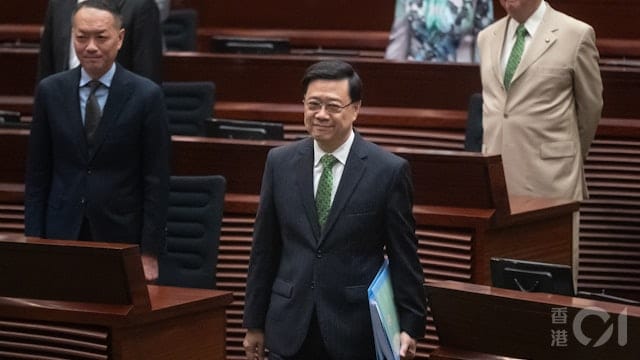
With unemployment rising, attention has focused on imported labour's impact on the job market. Chief Executive John Lee's fourth Policy Address, delivered today (17th), does not suspend the importation scheme but adds requirements for the two categories with the most imported workers — waiters and junior cooks — extending employers' local recruitment period to six weeks and changing the "2:1" local-to-imported ratio from a company-wide headcount basis to a "same post/position" basis.
Lee said the population's continued ageing is shrinking the labour force, and moderate labour importation eases manpower shortages in Hong Kong's overall interest. To combat abuse of the ESLS, new requirements for waiter and junior-cook applications take effect tomorrow.
Employers applying must extend local recruitment from four to six weeks, attending a Labour Department on-site job fair weekly during the period.
2:1 ratio moves from company-wide to per-position calculation
The existing local-to-imported ratio of 2:1 was calculated across all company positions; Lee said it will now be calculated per applied position. In other words, an employer applying to import one waiter and one junior cook must already employ two local full-time waiters and two local full-time junior cooks.
Lee said these measures target the trades with the most imported labour — ensuring businesses genuinely facing local recruitment difficulty can import workers in an orderly way, while preventing closures caused by understaffing that would throw existing staff out of work entirely.
Union: tightened ratio protects half of frontline staff; 6-week extension may achieve little
Ho Yan-ching, general secretary of the Hong Kong Catering Industry Employees General Union, believes the adjusted ratio protects local workers' job opportunities. For example, a restaurant's back office might have 30 staff and the frontline about 10; under the old calculation it could hire 20 imported workers — replacing the entire frontline. The new per-position basis secures at least half the frontline roles. He suggested the government extend the approach to other trades once its effect is visible.
However, he doubted the six-week recruitment extension would achieve much: "companies sincerely willing to hire locals can find people in two weeks." He worries some firms still treat local recruitment as a formality — setting unreasonable conditions to deter local applicants, then using that to apply for imported workers.
He suggested requiring employers to submit income data for staff in the same positions, ensuring job-fair wage offers don't fall far below market.
The ESLS launched in September 2023, suspending for two years the rule barring importation of 26 job categories and low/non-skilled positions; the scheme's term has now expired. May–July unemployment reached 3.7%, with catering at 6.4%. Local workers blame expanded importation for rising unemployment, dismissals after hiring imported staff, and weakened bargaining power.
Original article: https://www.hk01.com/社會新聞/60277210/施政報告2025-侍應初級廚師外勞比例收緊-本地招聘期延長至6周
If you are a Hong Kong employer wanting to know more about hiring imported workers, book a free consultation now — [Cheung Fung Labour Consultancy] provides one-stop, legally compliant advisory services.