
Imported labour tightened | Catering fears Chinese restaurants still can't hire — sector denies low pay is the cause | HK01
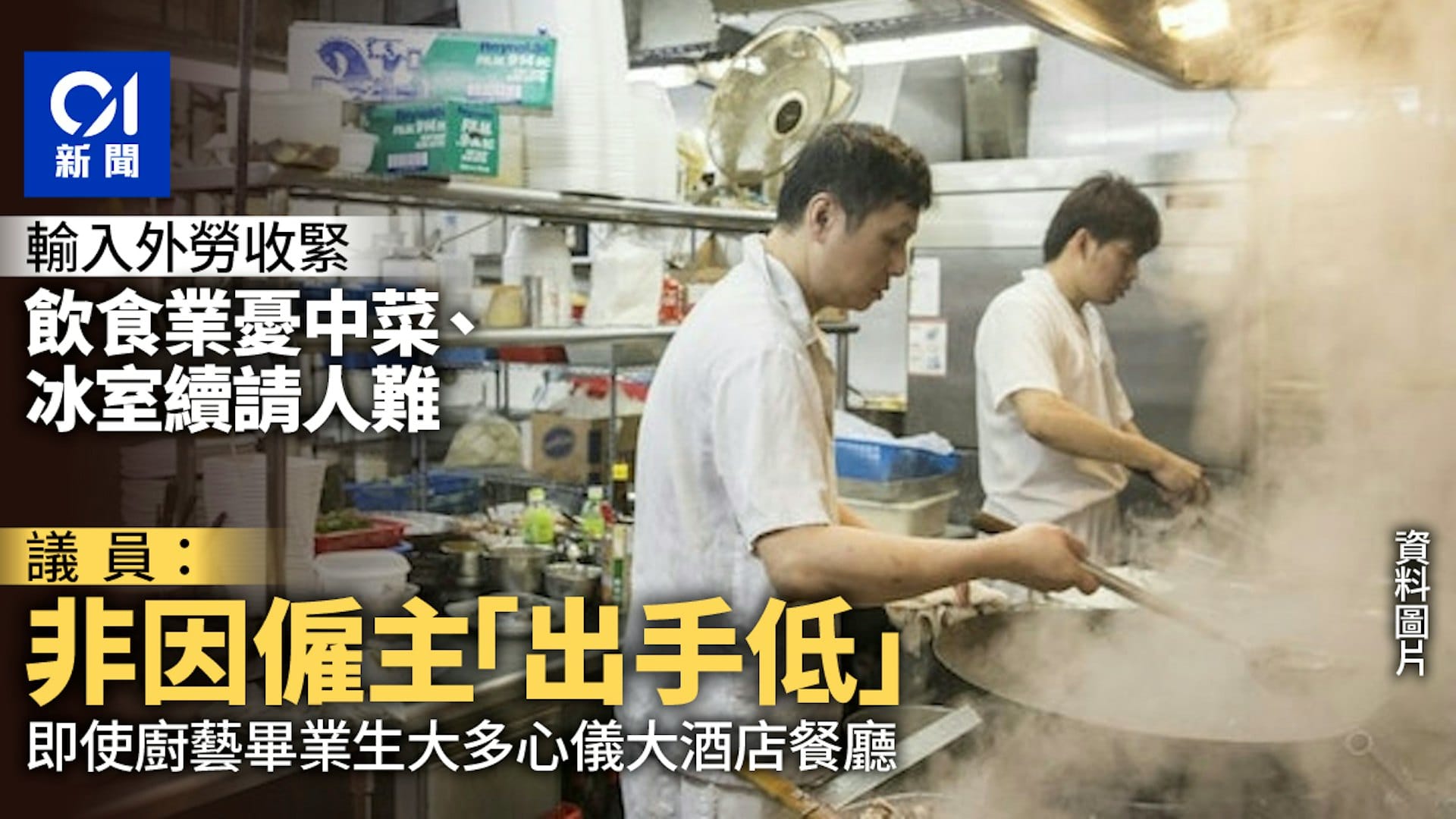
The Labour Department has completed its ESLS review, implementing multiple measures from tomorrow (16th): a two-tier approval system — Tier 1 keeps current rules, Tier 2 moves to a 3:1 ratio — and administrative sanctions for violating employers extended to a maximum of five years. The department said catering recently offered nearly 4,100 vacancies with only 12 acceptances, attributing this partly to workers' skills not matching restaurant cuisines, and hopes tightening will lead employers to recruit on better terms.
Catering-sector LegCo member Michael Leung believes hiring difficulty is not about "low offers" but about young people's reluctance to join traditional Chinese restaurants and cha chaan tengs — culinary graduates mostly prefer hotel restaurants — worrying that tighter ratios mean smaller operators "still won't be able to hire". Labour unionist Dennis Lam supports the tightening, believing heavier penalties deter unscrupulous employers, and hopes employers raise pay to attract locals.
From last September to this May, catering had nearly 4,100 vacancies; 720 locals interviewed, 234 hired, only 12 accepted. Commissioner Tak-sum Hui said this reflects a "severe manpower mismatch" as Chinese dining declines and Southeast Asian restaurants rise, with experienced workers' skills not matching.
From tomorrow, the two-tier system applies: Tier 2 industries — cooks, front-of-house, waiters — see the ratio tighten from 2:1 to 3:1, with local recruitment extended to six weeks. Sanctions for violating employers rise from a two-year maximum to five.
Labour union supports tightening: more opportunities for locals
Dennis Lam, FTU-affiliated Labour Union chairman and LegCo member, supports the policy: catering unemployment runs at 6% or above, and tightening the ratio raises local employment opportunities. He noted some companies hire full-time imported workers and cut part-time roles — effectively taking work from women with family duties — so tighter ratios help preserve part-time positions.
He hopes the government will keep adjusting dynamically, reviewing industry data every six months: where unemployment rises and vacancies fall, industries should be moved into Tier 2 at 3:1. "I don't want them to change catering to 3:1 once and call it done forever."
Sanctions not meant to punish employers but to deter
On extending sanctions from two to five years, Lam said the aim is deterrence, not punishment — stopping employers from hiring imported workers instead of locals. If employers offer "just a little more" pay to attract locals, the problem largely resolves.
Sector denies low pay is the cause — it's the industry's nature
Catering-sector LegCo member Michael Leung said not the whole industry struggles, but traditional Chinese restaurants and cha chaan tengs face acute difficulty — even when unemployment was low, hiring was hard and young people resisted entering. He takes a wait-and-see view, expecting results within three to six months and hoping local workers fill the gaps. Asked whether low pay explains the hiring difficulty, he disagreed — attributing it to industry nature and young people's unwillingness to work in traditional Chinese venues.
Leung cited Chinese Cuisine Training Institute graduates, most of whom go to hotels: "Our worry is that even after tightening, when labour friends look for jobs, they won't take those — leaving operators of Chinese restaurants still unable to hire." He added that some sector job fairs offered around a thousand positions with barely a dozen applicants.
Original article: https://www.hk01.com/article/60360418?utm_source=01articlecopy&utm_medium=referral